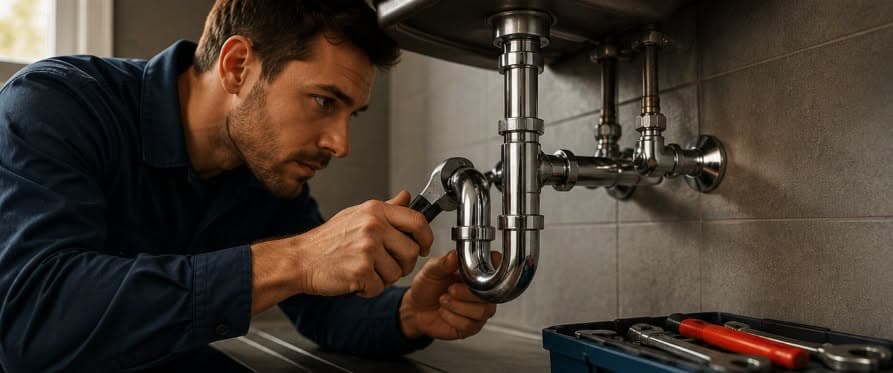
Emergency plumbing call-outs are expensive — typically 2-3 times the rate of a standard appointment — and they almost always happen at the most inconvenient times. Burst pipes in the early hours of a Sunday morning, a leaking boiler on Christmas Eve, or a blocked drain on the day new tenants move in are scenarios that drive up costs and stress for landlords and homeowners alike. Most plumbing emergencies are preventable with some basic attention and regular maintenance. Here is how to stay ahead of the problems.
Know Where Your Stopcock Is
This sounds obvious, but in a genuine emergency — a burst pipe flooding your kitchen — you need to be able to turn off the water supply in seconds, not minutes. The main internal stopcock is usually under the kitchen sink, but it can also be in the cupboard under the stairs or in a utility room.
Make sure it turns — stopcocks that haven't been operated in years can seize. Turn it off and on again every six months to keep it free. Make sure your tenants also know exactly where it is and how to use it.
There is also an external stopcock in the pavement outside your property. Know where this is too, as a last resort.
Protect Pipes Against Frost
Frozen and burst pipes are one of the most common — and most expensive — winter plumbing emergencies. Water expands as it freezes, and plastic or copper pipes that freeze and then thaw can split, dumping hundreds of litres of water into your property.
Prevention measures:
- •Keep heating at a minimum of 12°C even when the property is empty
- •Lag exposed pipes in loft spaces and outbuildings with foam pipe insulation
- •Check that any external tap (bibcock) is either insulated or turned off at the isolation valve inside
- •Insulate the cold water tank in the loft if your property has one
For void properties in winter, this is particularly important. An unheated property for even a few days in a sharp frost can result in thousands of pounds in water damage.
Deal with Dripping Taps Promptly
A dripping tap wastes money on water bills, but more importantly, a constantly dripping tap usually indicates a worn washer or O-ring that will eventually fail completely. A full failure can mean water running freely from a fixture, significant water damage to cabinetry, and an emergency call-out that costs far more than the simple washer replacement would have.
If you or your tenants notice a dripping tap, address it on the next routine maintenance visit — it is a very quick and inexpensive fix at that point.
Keep Drains Clear
Blocked drains are another major source of emergency call-outs. The blockage builds up over weeks or months — hair in shower drains, grease buildup in kitchen sinks, scale in waste pipes — until one day the drain simply stops working.
Prevention tips:
- •Use drain screens/hair catchers in showers and baths — remind tenants to empty them weekly
- •Never put cooking fat down the sink — it solidifies in cold pipes and builds up rapidly
- •Run hot (not boiling) water down the sink after washing up to help clear grease
- •Add a cup of bicarbonate of soda followed by white vinegar monthly in slow-draining sinks — this helps break down buildup
- •For external drains, check and clear leaves and debris seasonally
If drains are running slowly but not fully blocked, a professional jetting service is far cheaper than an emergency call-out for a fully blocked drain.
Monitor Water Pressure
Unusually high water pressure puts stress on every joint, washer, and connection in your plumbing system. Over time this causes accelerated wear and increases the likelihood of failures. Acceptable mains water pressure is typically 1-3 bar. Much above 3 bar and you should consider a pressure reducing valve (PRV).
Signs of high pressure: taps that make noise when turned on, pipes that vibrate or hammer, unusually forceful toilet cistern filling. A plumber can fit a PRV in under an hour.
Low pressure is also problematic and can indicate a leak somewhere in the system. Suddenly reduced pressure warrants investigation.
Inspect Under Sinks Regularly
The space under kitchen and bathroom sinks is easy to ignore until there's a problem. Slow leaks from compression fittings, waste traps, or flexible hoses can cause significant water damage to cabinet interiors and the floor beneath before they become obvious.
Check under sinks every few months — look for any discolouration, softening of the cabinet base, or damp smells. A slow leak detected early costs a few pounds to fix; left for months it can mean new cabinets, flooring, and potentially floor structure repair.
Invest in Annual Boiler Servicing
The boiler is the most expensive single piece of plumbing and heating equipment in most properties. An annual service — which includes checking pressure, seals, heat exchanger, and safety devices — dramatically reduces the risk of mid-winter breakdown.
Many boiler breakdowns could have been prevented if the fault had been caught at an annual service. Servicing also keeps manufacturer warranties valid and is a landlord legal best practice.
The Value of a Maintenance Contract
For landlords with multiple properties, a maintenance contract with a professional company means that routine plumbing checks are built into a regular inspection schedule. Small issues are caught and fixed before they become emergencies.
Premier Property Solutions offers reactive and planned maintenance contracts across Dartford, Kent and South East London. Our plumbers are available for emergency call-outs too, but our focus is always on prevention first.
Call us on 01322 251520 to discuss a maintenance package for your property or portfolio.
Premier Property Solutions
Property maintenance specialists serving Dartford, Kent and South East London since 1996.