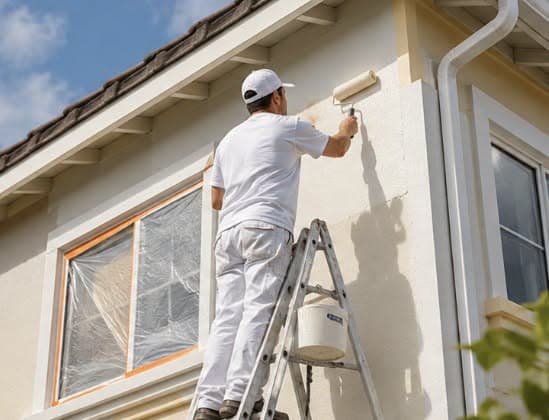
Exterior paintwork is your property's first impression and its primary defence against the British weather. Cracked, peeling, or faded paint not only looks neglected — it allows water to penetrate timber, metal, and render, causing structural damage that is far more expensive to repair than the painting itself. This guide covers when to paint, what products to use, and what proper preparation looks like.
When Should You Paint Exterior Surfaces?
Timing is critical for exterior painting. Paint requires specific conditions to adhere and cure correctly:
Temperature: Most exterior paints require ambient temperature above 5°C and surface temperature above 3°C. Painting in cold conditions results in poor adhesion and premature failure. Avoid painting if frost is forecast within 24 hours.
Dryness: Surface must be completely dry before painting. Rain, dew, or high humidity (above 85%) prevents proper adhesion and drying. Check forecasts for at least 24-48 hours after the final coat.
UV and heat: Very hot, direct sunshine can cause paint to dry too quickly at the surface, trapping solvent and causing blistering. Paint in shade if possible on very hot days.
The ideal window: Late spring (May-June) and early autumn (late August-September) offer the best combination of adequate temperatures, lower humidity, and longer dry periods. Avoid mid-winter entirely for timber and render painting.
Surface Types and Their Requirements
Different exterior surfaces require different products and preparation methods:
Timber (Window Frames, Fascias, Soffits, Doors)
Timber expands and contracts with temperature and moisture changes. Exterior paint for timber must be flexible enough to accommodate this movement without cracking.
Modern approach — microporous paints: Microporous or "breathable" exterior timber paints allow moisture vapour to pass through the paint film, significantly reducing the peeling and blistering associated with older paint systems. Brands like Dulux Weathershield, Crown Weathercoat, and Teknos Futura work this way. Build up with a primer, undercoat, and two topcoats for a complete system.
Traditional oil-based gloss: Historically the standard for timber, oil-based gloss is durable but non-breathable. Excellent for surfaces that don't move significantly. Requires correct solvent-based primer and undercoat. Dries harder and slower than water-based alternatives.
Key preparation: All loose or flaking paint must be completely removed by sanding, scraping, or in extreme cases heat gun. All bare timber must be primed immediately — unprimed bare timber absorbs moisture within hours. Fill all cracks and splits with exterior flexible filler. Sand smooth when dry.
Masonry (Brick, Render, Concrete)
Exterior masonry paint must be permeable (allowing walls to breathe) and resistant to algae and mould growth — particularly important in the damp UK climate.
Smooth masonry paint: For rendered or smooth brick surfaces. Products like Dulux Weathershield Smooth or similar provide 10-15 year durability claims. Apply with a long-pile roller.
Textured masonry paint/Sandtex: For textured or rough rendered surfaces. Provides additional weatherproofing and covers minor surface imperfections.
For repair renders: If render is cracking or blown (hollow-sounding when tapped), it must be cut out and re-rendered before painting. Painting over blown render is a temporary fix that will fail. Any cracks wider than a hairline should be filled with exterior flexible filler before painting.
Metal (Railings, Gates, Gutters, Downpipes)
Metal requires specific rust-inhibiting primers before topcoats:
Iron and mild steel: Wire brush to remove all rust and flaking, apply a rust-inhibiting primer (red oxide or modern synthetic types), finish with two coats of oil-based or appropriate modern topcoat.
Aluminium and galvanised steel: These need adhesion primer rather than rust inhibitor before topcoats.
Preparation: The Most Important Step
Exterior painting failures almost always come back to inadequate preparation. Professional decorators invest significant time in preparation:
1. Power wash: Remove all dirt, algae, moss, and loose material with a pressure washer. Allow to dry fully (at least 24-48 hours). 2. Treat algae and mould: Apply a fungicidal wash to any areas with biological growth. Allow the recommended contact time before rinsing. 3. Remove loose paint: All flaking, peeling, or loose paint must be removed. A multi-tool or heat gun is efficient for large areas of timber. 4. Fill and repair: Fill all cracks, holes, and imperfections with appropriate exterior filler. Repair any blown render or damaged masonry. 5. Sand: All filled areas must be sanded smooth. Existing gloss surfaces should be sanded to provide key. 6. Prime: Bare timber and bare masonry must be primed before topcoats. 7. Mask: Protect glass, metalwork, and adjacent surfaces with decorator's tape and dust sheets.
How Many Coats?
A proper exterior paint system typically consists of:
- •**Primer coat(s):** One or two coats on bare surfaces
- •**Undercoat:** One coat on timber
- •**Topcoats:** Two coats minimum on all surfaces
Cutting corners and applying a single topcoat to inadequately primed surfaces is the most common cause of premature paint failure. The material cost difference between one and two topcoats is minimal; the labour for a return visit to repaint in two years is significant.
Exterior Painting for Rental Properties
From a landlord's perspective, exterior painting serves both protective and commercial purposes. A well-maintained exterior:
- •Justifies higher rental values
- •Attracts quality tenants
- •Prevents ongoing structural deterioration
- •Satisfies local authority requirements (some councils can compel exterior maintenance)
For most properties, exterior painting should be considered every 5-8 years for render/masonry and every 4-6 years for timber. Properties in exposed locations or with south or west-facing elevations (taking the prevailing weather) may need attention more frequently.
Working at Height
Exterior painting above ground floor level requires safe working at height. Professional decorators use scaffold towers, mobile access platforms, or in some cases scaffolding for multi-storey properties. Never use a stepladder alone for work above 2 metres — this is unsafe and potentially illegal under the Work at Height Regulations.
Premier Property Solutions provides professional exterior painting services across Dartford, Gravesend, Bexley, Greenwich, and the surrounding areas. Our decorated team works with safe access equipment and quality exterior paint systems to deliver lasting results. Call 01322 251520 for a free exterior painting quote.
Premier Property Solutions
Property maintenance specialists serving Dartford, Kent and South East London since 1996.