The difference between a professional paint finish and an amateur one usually comes down to preparation, technique, and patience rather than talent. Professional decorators spend the majority of their time preparing surfaces — the painting itself is relatively quick. Here are ten tips from our experienced decorating team that will significantly improve your results.
1. Preparation Is 80% of the Job
This cannot be overstated. Professional decorators spend far more time preparing surfaces than actually painting them. Skipping preparation leads to paint that peels, cracks, or looks uneven within months.
Before painting any surface:
- •Fill all holes and cracks with appropriate filler (lightweight filler for small holes, harder filler for larger damage)
- •Sand filled areas smooth once dry and feather the edges
- •Sand all painted surfaces lightly (240 grit) to provide key for new paint
- •Wash walls with sugar soap solution to remove grease, grime, and nicotine
- •Remove all loose or flaking paint — new paint over loose old paint will fail
2. Use the Right Primer
Primer is not optional — it is the foundation of a good finish. Different surfaces need different primers:
- •**New plaster:** PVA diluted 1:4 or specialist mist coat (heavily diluted emulsion) to seal the surface before full coats
- •**Previously painted wood:** Sandpaper, then an oil-based or shellac primer on any bare patches, especially knots
- •**Bare metal:** Specific metal primer to prevent rust
- •**Stains (water marks, nicotine, felt tip):** Shellac-based stain blocker is the only thing that truly blocks these
3. Invest in Quality Brushes and Rollers
Professional decorators use quality tools because they make a genuine difference. Cheap brushes leave bristles in the paint and don't hold as much paint. Cheap rollers can leave a textured finish or splash.
For walls: A quality 9-inch roller with the correct nap thickness for your surface (short nap for smooth, medium nap for most walls) will give a consistent finish. For ceilings, a larger roller saves time.
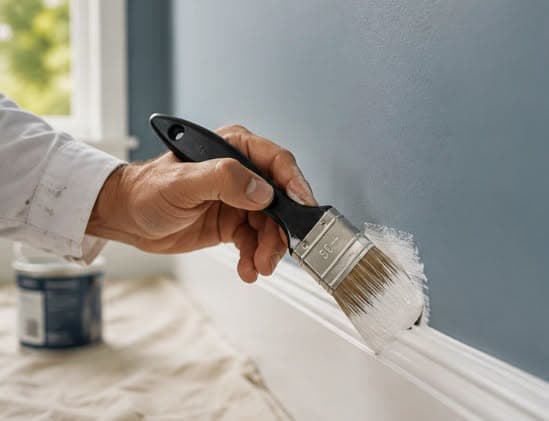
For cutting in (edges, cornices, skirtings): A 2-inch angled cutting-in brush from a quality brand like Purdy, Hamilton, or Wooster makes clean lines far easier to achieve.
4. Maintain a Wet Edge
This is a critical technique that prevents lap marks — visible lines where one section of paint has started to dry before the adjacent section is applied. The fix is to always maintain a wet edge as you work.
Work systematically — for walls, roll top to bottom in sections, keeping the leading edge wet and blending into it as you go. Don't stop mid-wall and return later — finish the wall or complete a natural break point.
5. Two Thin Coats Beat One Thick Coat
A thick coat of paint takes much longer to dry, risks drips and runs, and often dries unevenly. Two properly thinned coats — allowing full drying time in between — always give a better finish.
Allow the manufacturer's recommended drying time between coats. In cold or humid conditions, allow longer. In heated rooms in winter, paint can feel dry to the touch in an hour but may not be ready for a second coat for several more.
6. Cut In Before Rolling
Always cut in (paint the edges and corners with a brush) before rolling the main flat area. This allows you to roll slightly into the cut-in wet area to blend the two seamlessly. If you roll first and cut in after, you will often see a distinct brushed edge against the rolled finish.
7. Protect Everything You Are Not Painting
Professional decorators spend significant time masking up. This is not excessive — it saves time on cleanup and produces cleaner results.
- •Mask off skirtings and architraves with proper decorator's tape (low-tack blue tape or the higher-quality yellow specialist tape)
- •Use dust sheets everywhere paint can splash or drip — paint on carpets is almost impossible to remove fully
- •Remove or cover light switches, sockets (turn off power first), and door furniture
8. Roll at the Right Speed
Rolling too fast atomises the paint and leaves it as a fine spray mist that settles everywhere. Roll at a moderate, consistent pace. The visual pattern of "W" or "M" shapes helps ensure even coverage — apply in a rough W or M shape, then back-roll to even out.
9. Woodwork Requires a Different Technique
Painting skirting boards, door frames, and doors well requires a different approach from painting walls:
- •Sand between every coat — minimum 240 grit, wiping dust off before painting
- •Apply water-based satin or gloss in long, even strokes following the grain
- •Watch for drips at the bottom of vertical surfaces and brush them out immediately
- •For doors, paint panels first, then horizontal cross rails, then vertical stiles last
10. Light Reveals All — Check Your Work
A common mistake is to finish painting without checking the quality of the finish. Take a light (a phone torch held at an angle works) and rake it across your freshly painted surface. This highlights missed areas, runs, roller marks, and any imperfections that are invisible in standard room lighting.
Address any issues before the paint fully cures. A light sand and touch-up is easy on fresh paint; very difficult once fully hardened.
When to Call a Professional
Some jobs genuinely benefit from professional involvement: exterior painting (working at height, weather-resistant coatings), large commercial spaces, heritage properties with detailed cornices, or any situation where the specification or expectations are high.
Premier Property Solutions' painting and decorating team works across Dartford, Bexley, Greenwich, and the surrounding areas. We prepare every surface meticulously and use premium paints for results that last. Contact us on 01322 251520 for a free quote.
Premier Property Solutions
Property maintenance specialists serving Dartford, Kent and South East London since 1996.